
Privacy Trees Ornamental Trees Deliver & Plant "Before & After" Photos Research Tree Care About Us FAQ
Call Us: 425-343-2650

TREE TERMINOLOGY:
Primer for the Uninitiated
Taken from "Gardening," a publication of the
American Nursery & Landscape Association
Balled and burlapped
Typically, “b and b” trees are grown in the ground versus a container. Once
trees are removed from the ground, their root ball is wrapped in burlap and
prepared for sale. Consumers usually have a wider range of material when
choosing balled and burlapped trees. They tend to be larger and can be planted
at any time.
Container stock
As the name implies, some trees are grown in containers. From an industry
standpoint, container trees offer an advantage because soil mixes are lighter
than native soils. This makes them easier to ship. Home gardeners should know
that container trees demand more water initially than trees grown in native
soil. Container stock has been babied, so it takes extra care to establish.
Bare root
A mere slip of a tree, bare root material has a very limited planting time and
must be handled (harvested, shipped, planted) during dormancy. Be careful where
you purchase bare root trees. Bargains aren’t always the best value in terms
of quality. Bare roots are a perishable commodity - get them in the ground as
soon as possible.
Dormancy
Trees that drop their leaves in fall and leaf out again in spring are known as
deciduous. Dormancy is that period of winter rest where very little plant
activity takes place. Dormancy is thus a good time to purchase, transplant or
prune trees.
Caliper
A tree’s diameter is known as its caliper and is measured at either six or
twelve inches from the ground, depending on the size of the tree. Calipers give
the industry a standard method of measuring nursery stock. They help us
determine the size and weight of the root ball.
The type of tree you select depends a lot on how long you plan to remain in your home. If you’re going to move within five years, purchase a fast-growing tree and plant it in a high visibility area. That way, you’ll get the most impact for your dollar. If you want to shade out summer sun but need winter warmth, select a deciduous tree. Evergreens add color to winter landscapes and serve as windbreaks if situated properly.
Most tree deaths are water related - they either get too much irrigation or not enough. Understanding water requirements is essential to successfully establishing a tree. Nursery professionals can teach you how to “read your tree” for signs of water loss or other stressful health conditions.
Proper tree selection, planting and care takes some effort, but the rewards are worth it. Trees help homeowners by reducing air conditioning costs, beautifying landscapes, increasing property value and lessening bothersome noise. They help the environment by controlling erosion, cleaning the air and by providing wildlife habitat. So plant a tree. The landscape and the environment will be better for it.
(Taken from the Fall/Winter 2001 issue)OTHER USEFUL RESOURCES:
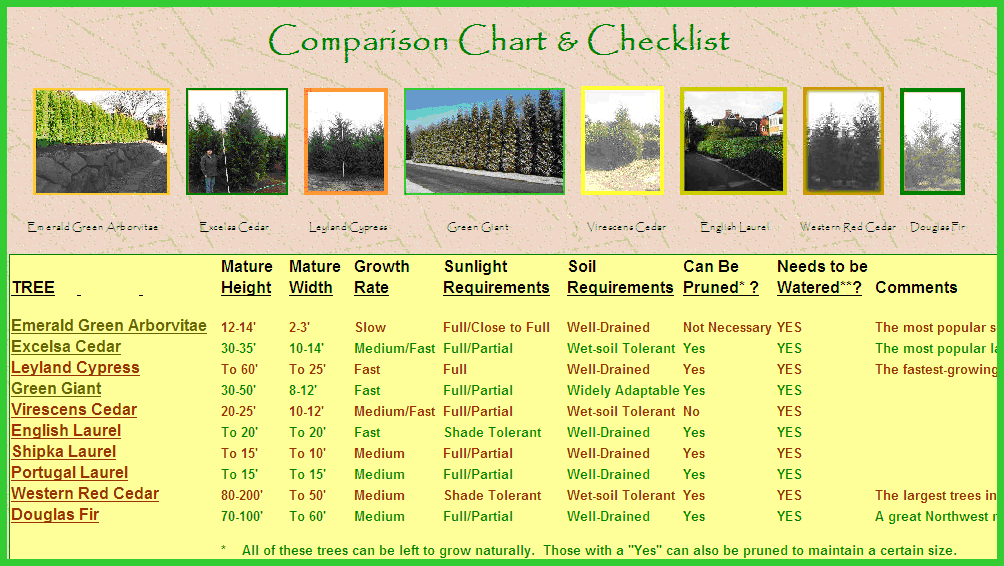
Privacy Tree Comparison Chart
To quickly and easily compare the mature sizes, growing conditions, etc. for all of our privacy trees,
please click on the Privacy Tree Comparison Chart.
__________________________________
"Top 10 Privacy Trees in Washington State"
This article discusses privacy tree options, pros and cons, growing conditions,
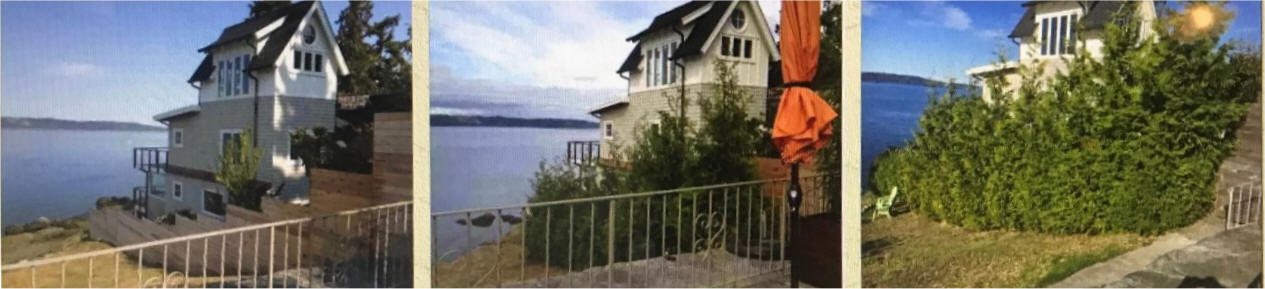
with "Before & After" photos. Click here.
__________________________________
See our Trees Growing in the Fields!
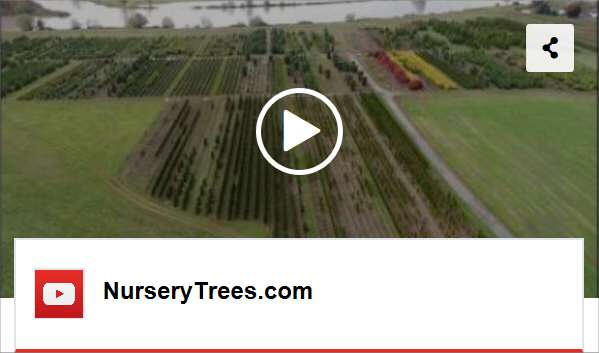
We have a beautiful 8 minute drone video of our Snohomish tree farm
with many of the trees identified. Click here
__________________________________
Privacy Trees: We are a nursery tree farm specializing in Privacy Trees for screening. We have several thousand privacy trees growing at our Snohomish farm. Plus we have many years' experience in "what works where", professional planting services, ongoing support, and thousands of satisfied customers. Buying directly from a grower has great advantages--fresh trees, great selection, and low prices--you maximize your purchasing power. For more information click here.
We also have privacy trees that are not available elsewhere, such as our "Hedged Privacy Trees". For many years we have been pruning some of our privacy trees into tall, narrow hedges so we now have "Instant Privacy" trees in a narrow, hedged form. Sometimes these "hedged" trees are the only trees that will fit into the planting space, and no one else in the Northwest has anything like them. You can see our hedged and natural privacy trees in our beautiful 8 minute YouTube Farm Video.
Ornamental Trees: We also have a nice selection of Ornamental Trees, with many of our trees being on the "Great Plant Picks" list for the Pacific Northwest.
Free Estimates: We will help you determine which trees are right for your project, and provide you with free, no-obligation estimates. This is often accomplished by e-mail and phone, usually first using our online Free Estimate Request Form. Where necessary, we will send one of our experts out to review the project (no cost or obligation). More information
Location: We’re conveniently located just 15 minutes north of Woodinville. We’d be happy to have you out. We are a farm, not a retail nursery so we don't keep regular retail hours; instead we set up appointments so that we can focus on your project--we look at photos and plans with you, and drive you around the farm and look at the tree options. More information
Payment: We don’t require any money “up front”—you only pay when the job is completed (unusual exceptions to this are large/special projects or lengthy “holds” on trees). Be careful of contractors asking for “up front” money; they might not come back!
Warranty & Support: When we plant your trees we include staking (if necessary), transplanting fertilizer, and an easy-to-use watering system that hooks into your garden hose. More information. We also give a one year Warranty on trees we plant, for no additional charge. More information We have a detailed “Care of Your Trees” section of our website, and provide ongoing support--we're available to answer your questions as your new trees grow. More information
Customer Service: We pride ourselves on our Customer Service—real people answering the phone. We have an "A+" rating with the Better Business Bureau (their highest rating), are an Angie's List Super Service Award winner, have excellent reviews on Yelp, Google, etc. and a 100% satisfaction rating with eBay.
Our Business: We’ve been in business since 1995 and have a dedicated, experienced staff, most of whom have been with us for many years. More information We sell retail & wholesale, for residential and commercial projects. We are a registered Washington State contractor (License Number: NURSEL*956J1). More information Be sure to hire a registered contractor -- to go to the Department of Labor & Industries website to check a contractor's registration, click here. As it says there: "Unregistered contractors carry no bond or insurance to protect consumers. Consumers can face serious issues if anything goes wrong on a job." These liability risks are in addition to fraud, poor workmanship, worthless warranties, etc. We are fully bonded and insured, of course.
Customer Satisfaction: Most important of all is what our customers think of us:
"I am really pleased with your work. You saved me several thousand dollars, steered me away from trees that wouldn't work, provided healthy and beautiful trees, did a great job planting them, and did everything on time and on schedule. You can quote me." Jo, Vashon Island
"Our privacy bank of trees has done nothing but grow well into maturity. Our back yard and deck area is totally private and the 10 trees your team planted [in 2005] are rich, leathery and dark green. We remark on them every day it seems. Please include me in any of your "Testimonials" as you would be hard pressed to find a more satisfied customer." Jim, Port Orchard
"For quality vs. value, your trees are the best landscape purchase I’ve ever made." Jeff, Seattle
"Michael, I just wanted to pass along a note to tell you how thrilled I am with the trees. The effect they have brought to our new courtyard in the front of our home here in Seattle has exceeded my expectations!" Chip Hanauer, Hydroplane Driver--Click Here to see his project.
"I work in customer service so I know good service when I experience it and you have my top rating. I would definitely recommend you to anyone who needs new landscaping. Thanks again.” Carol, Camano Island
"The [new] trees were a great privacy feature when we sold the last house! We now have a much larger space we want to talk with you about . . " Katherine, Fall City
“My compliments to your crew. We’ve had a lot of contractors working on our house recently and we’ve seen the entire range; and your guys were excellent. The trees make things look so much better—I started smiling as soon as I saw them going in." Holly, Queen Anne
"You guys are the best nursery I've ever done business with! And I have dealt with a few. You did what you said you would, on time with attention to detail rarely found. From the beginning of the quote process all the way through to the last detail you made it easy. And you work to ensure that the trees will thrive after planting with detailed advice, a complementary irrigation system, and a website filled with useful information. Most nurseries will just dump off the goods and tell you best of luck, put some water on them. You provide a quality product that sets you apart. Your crew was friendly, polite and operated as a well organized team. I would recommend you without hesitation! Thanks for doing a great job!” Ryan, Buckley
"We can not believe how beautiful your trees are. The privacy is unbelievable. If you ever need a testimonial let us know. Our yard is perfect! We sit there and say "my oh my”! Suzanne, Tacoma
"I don't think I've ever been as happy with something I've purchased." Sarah, Sammamish
Many More Testimonials (click here)
Studies: Trees Add Value to Property
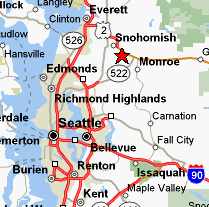
Our Convenient Location
15 minutes from I-405/Bothell-Woodinville
View Directions to our location.
Sales by "Appointment Only", please
Serving Washington State Since 1995
13510 Old Snohomish-Monroe Road
Snohomish, WA 98290
425-343-2650
(425) 953-5780 fax
Sales by "Appointment Only", please
Privacy Trees Ornamental & Landscape Trees Photo Gallery Care of Your Trees
Delivery & Planting Directions & Hours About Us/Contact Us
Privacy Policy, Website User Agreement, and Website Advertiser Agreement Site Map
Copyright 2024, NurseryTrees.com, LLC